A purple flower
Saffron comes from Crocus sativus, a small purple crocus that blooms in the autumn. Look into one flower and you will find three red threads. They are the stigmas of the flower, and they are the saffron.
The story of Kashmir saffron, from the flower to your cup.

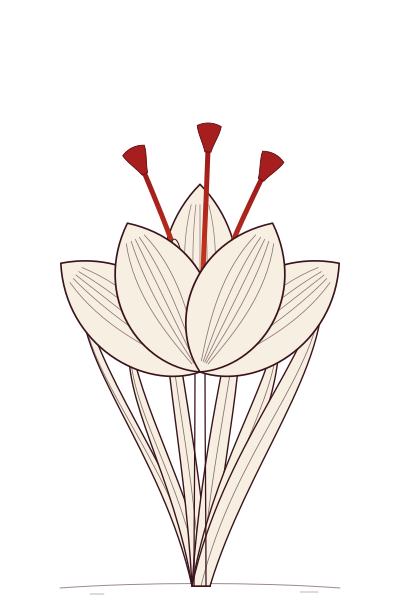
Saffron comes from Crocus sativus, a small purple crocus that blooms in the autumn. Look into one flower and you will find three red threads. They are the stigmas of the flower, and they are the saffron.
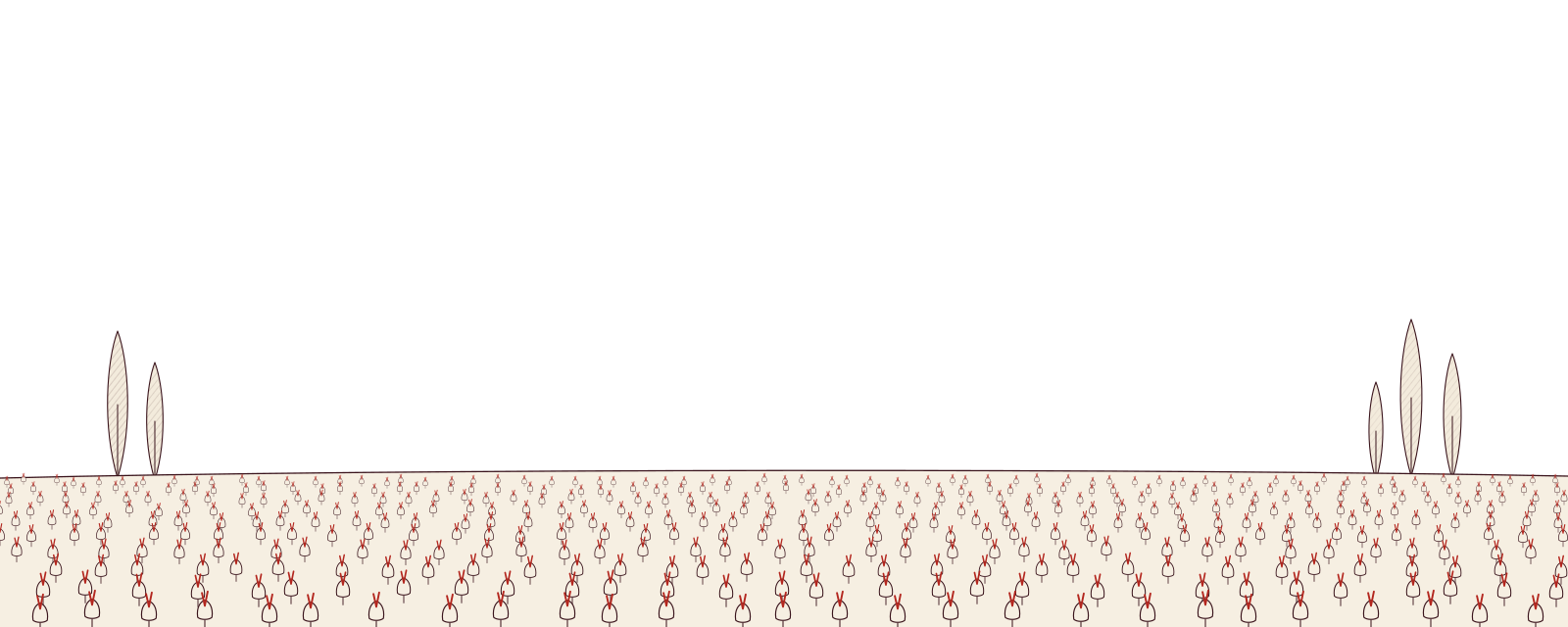
In Kashmir the crocus is grown on the karewas, the high, flat plateaus above the valley floor. Pampore, in the Pulwama district, is the centre of it, and people call it the saffron town of Kashmir. Saffron is also grown in Budgam, Srinagar and Kishtwar.
Growers describe Kashmir saffron as long, thick-threaded, deep red and strongly aromatic.
The harvest runs from mid-October into November. The flowers are picked by hand. The three red threads are taken from each flower, and then dried. Nothing in this work can be hurried, and no machine does it.
It takes well over a hundred thousand flowers to make one kilogram of saffron. That is why saffron is so precious, and why a few threads go a long way.
Saffron has been grown in Kashmir for a very long time. The National Mission on Saffron says its history there probably goes back beyond 500 BC.
In 2020, Kashmir saffron received a Geographical Indication (GI) tag. A GI tag protects a name that belongs to a place, so that “Kashmir saffron” means saffron from Kashmir. The tag protects the name of Kashmir saffron in general. We make no certification claim for our own tins.
Three kinds of saffron are traded in Kashmir: Mongra, Lachha and Guchhi.
Mongra is the top grade in Kashmir. It is made only of the crimson tips of the threads, with none of the pale yellow part. Lachha keeps more of the thread, dried as it was taken from the flower. Ours is Mongra.
Saffron is judged on three things: colour, taste and aroma. A laboratory measures the compounds behind each one. Crocin gives the colour, picrocrocin gives the slight bitterness, and safranal gives the aroma.
The international standard, ISO 3632, uses these measures to sort saffron into three categories, from the best down.
Steep a few threads in warm water for about fifteen minutes, until the water turns a deep gold. Add the water, and the threads, to your gahwa, tea or rice. For a stronger flavour, grind the threads first in a mortar, with a pinch of sugar, and then steep.
A few threads are enough. Too much turns bitter.
Keep saffron in an airtight tin, in a cool, dark, dry place, away from the stove.
Good saffron is deep red, with the threads flaring slightly at one end, and it turns warm water gold. Be careful of threads that look unnaturally bright, or that turn the water red at once. They may have been dyed.
These are signs, not proof. Only a laboratory report is proof.
Mongra saffron from Kashmir, packed by hand in the UAE by Umm Habib.
The facts above come from public reports on the 2020 GI registration, statements from the National Mission on Saffron, and summaries of the ISO 3632 standard.